
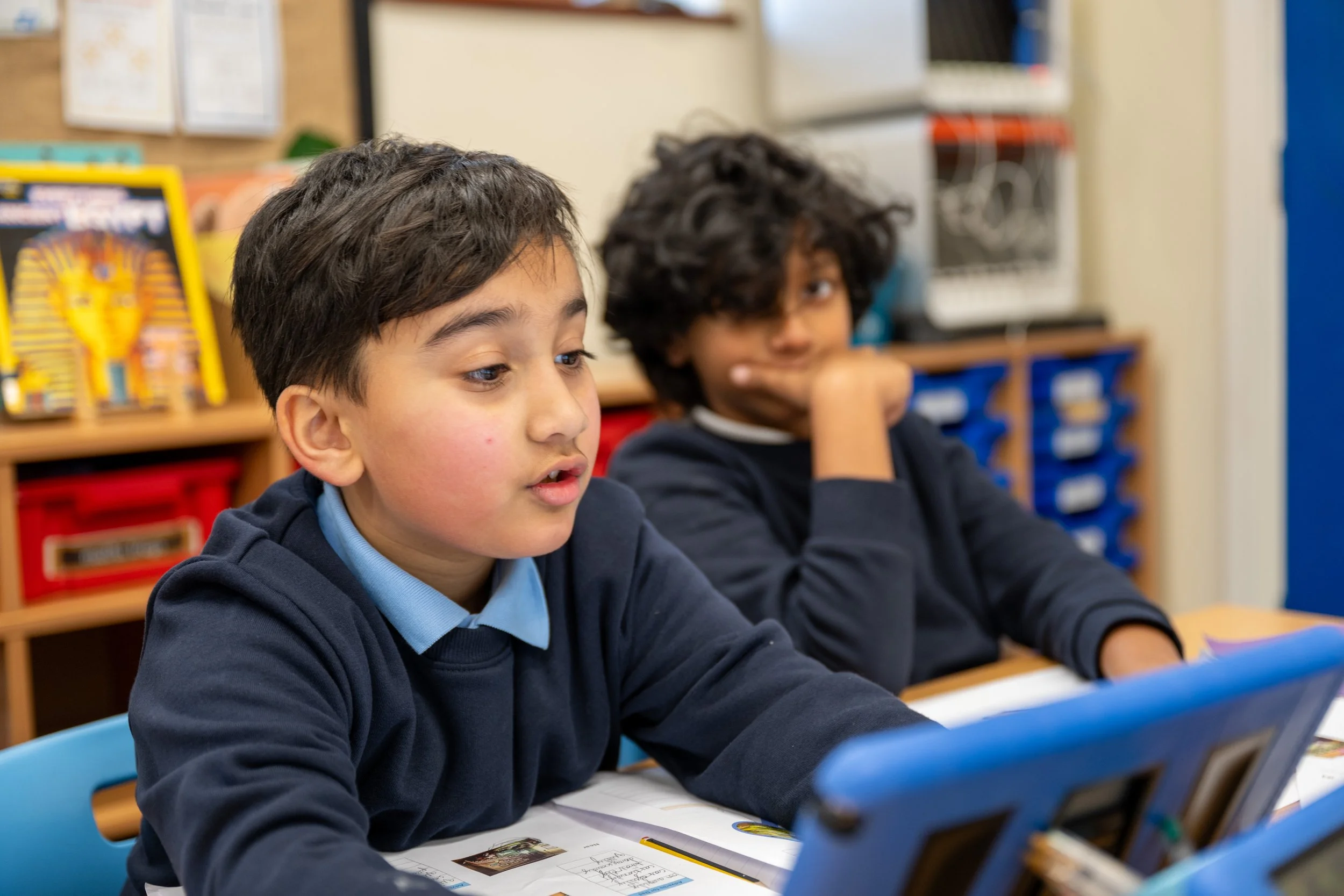
Homework

Homework
At Woodlands, we ask that parents encourage their children to:
read daily for at least 10 minutes
practise number facts and times tables
practise spellings
Talking with your child is also hugely important and has a big impact on their academic success. You could talk about the seasons, food, what they’re watching on TV or the news.
The Talk Homework website lists some other ideas for discussion - see button at the bottom of the page.
Oxford Reading Tree provide free ebooks - see button at the bottom of this page.
Research has shown that homework has little impact on the academic progress of primary school-aged children. However, we recognise that some parents would like their children to complete homework. In recognition of this, teachers in KS2 set creative homework (linked to topics) each half term. A number of activities are suggested, but children are always free to choose an idea of their own. This work is shared and celebrated in an assembly and prizes are awarded for the best efforts.
To practice times tables look at the TT Rockstars website - button at the bottom of the page.
The logins have been sent home previously.
Helping with handwriting at home
At Woodlands, we recognise the importance of automaticity in handwriting, so that children can form letters and numbers correctly without having to think about it. This allows them to concentrate on other things, like sentence construction or calculations.
We follow a scheme which allows us to teach handwriting consistently across the school. Letters are not taught in alphabetical order, but are grouped according to how they are formed. Teaching letters in groups or ‘families’ can help prevent letter reversals, e.g. b and d.
In Reception children are helped to identify which hand they want to write with and learn the correct pencil grip. They begin with pre-handwriting patterns before moving onto single letters and numbers. Children in Year One continue to write in print.
In Year Two, children consolidate writing in print before being taught how to write using continuous cursive, where each letter begins on the line with a lead in and a flick out. Once they are confident with forming single letters in continuous cursive, they are taught how to join letters. Children in Year Two are taught all of the different letter joins.
Year Three and Four children continue to practise joined writing, with a focus on the size and position of letters in relation to others and are encouraged to reduce the size of their writing so that it fits on smaller line width. In Years Five and Six, children continue to practise and refine their handwriting so they can have a comfortable, fluid hand movement and can write at speed. By now, letters should be consistently formed, positioned correctly and of appropriate size. This results in neat, legible handwriting.
The scheme we use doesn’t just focus on letter formation, but also provides a comprehensive package of activities and exercises to develop fine and gross motor skills, as the size of writing decreases and the accuracy of letter shapes improves as these motor skills are improved.
Please see the links below for videos showing letter formation in print and continuous cursive, as well as worksheets for you to print at home to support your child’s handwriting development.
If you would like to know more, please contact our English Lead, Mrs Williamson.